

Nominations for the Erin S. Soper Memorial Award open on March 4th. Established in 2022, the Erin S. Soper Memorial Fund distributes $500 stipends to teachers who sustain thriving school gardens.
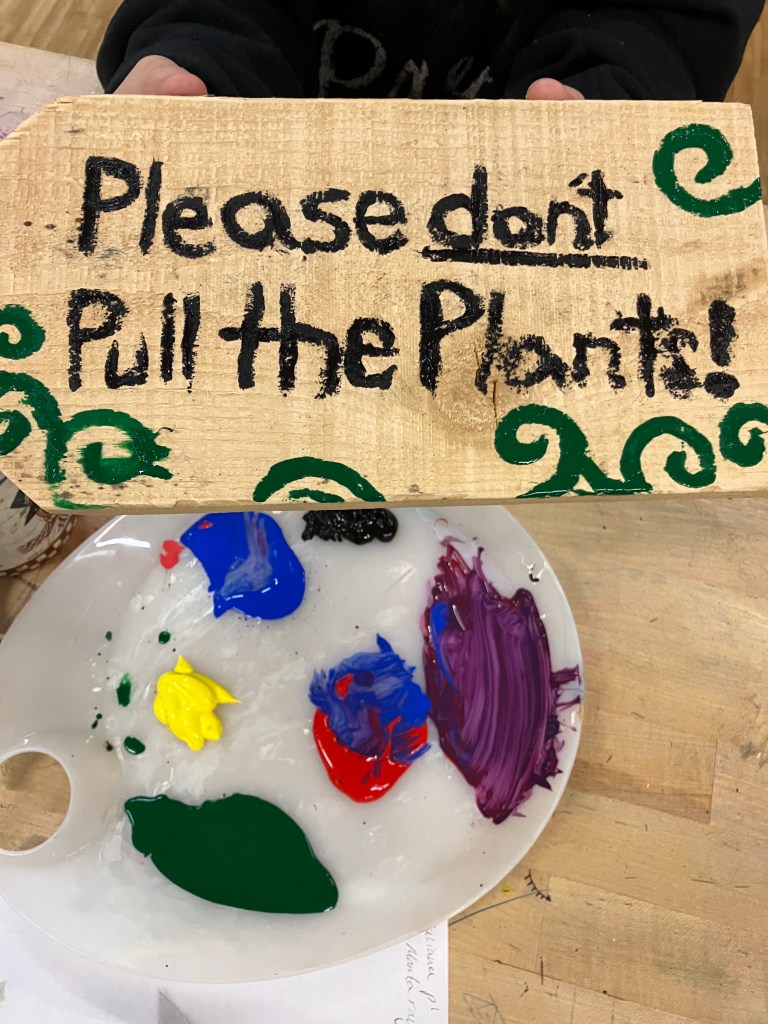
Looking for a sign?
Schools were inspired to create signs to share and protect native plants. For more inspiration, subscribe to this newsletter here.

Upcoming Events
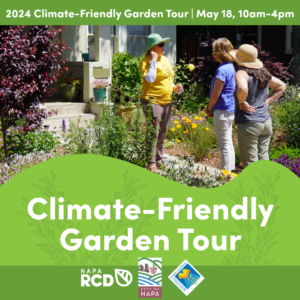
Napa RCD’s Climate-Friendly Garden Tour is May 18th from 10 am – 4 pm. They seeking garden submissions for this year’s event. In 2019, they included a school garden. Consider joining or attending.
Voices of Experience
Rebecca Abbott, A Board Member of The School Garden Doctor, shares how Paige’s story (below) connects to the Next Generation Science Standards.
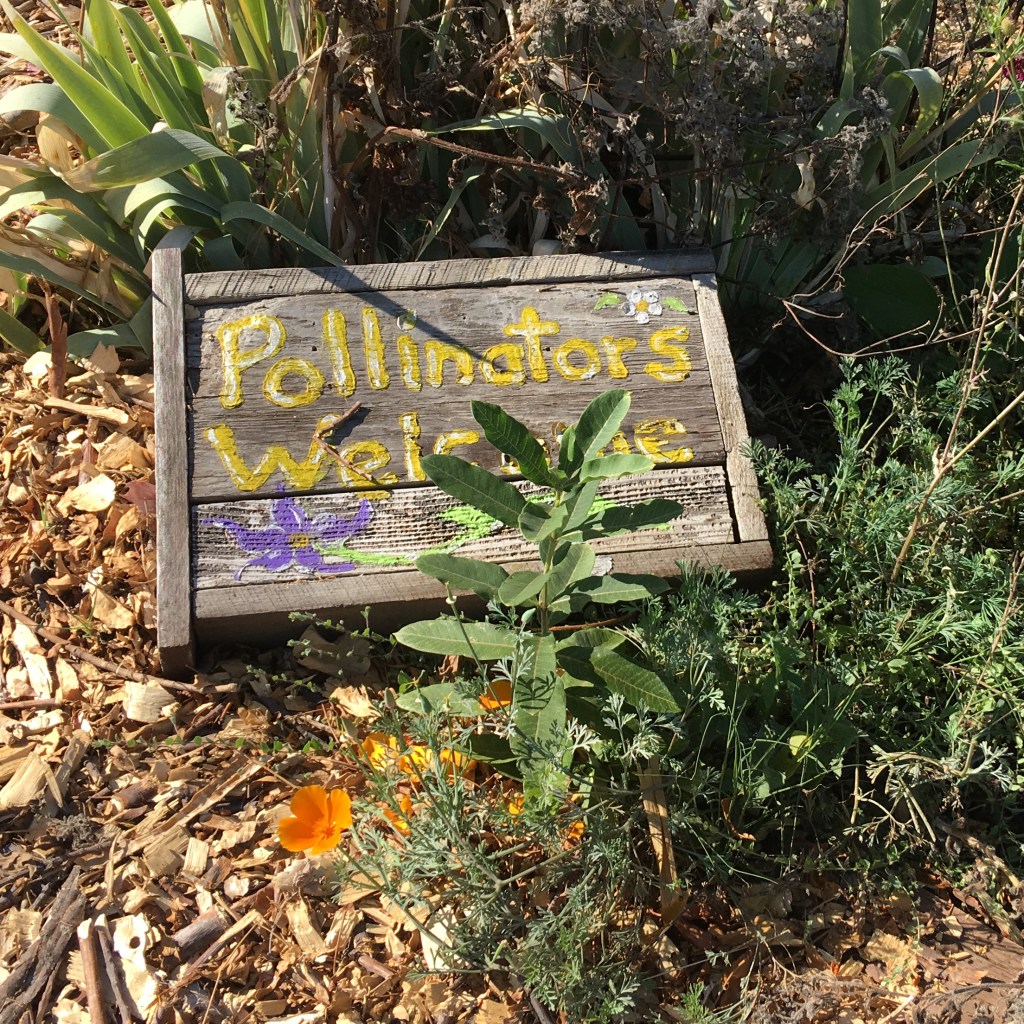
Our students make signs for the crops that they grow. The Pollinators Welcome sign is in Phillips School Garden where there are many types of flowers. The second grade science class goes out to learn pollination and seed dispersal each year. ~Paige Pleasant, Phillips Magnet School Garden
The idea of “standards” in education can bring to mind many things. For teachers and principals, it may bring to mind ideas about requirements to “meet the standards,” or it might be seen as helpful as it guides the course of study at a grade level. Families and community members may have varying levels of understanding about standards in school, such as how their child’s progress is measured and how they’re different from the content they experienced in school.
Regardless of our gut responses to academic standards, they are here to stay. One purpose of standards is to support equity, so no matter where a child attends school they have consistency in the academic expectations. We have standards for math, for science, for ELA and for social studies, as well as other subjects.
In science specifically, we have standards that are based on a visionary document called The Framework for K-12 Science (National Research Council, 2011). California and 20 other states have adopted the NGSS, or Next Generation Science Standards, based on The Framework. As someone who works with schools and districts across the country implementing the NGSS, which came out in 2013, I can say with certainty that these standards represent a big paradigm shift. They emphasize that students of all ages should engage in authentic scientific thinking and doing in order to figure out phenomena. This is a different type of teaching and learning than past standards.
So what does this mean for garden experiences and education? Does the NGSS lay out a course for teaching in the garden? The short answer is no, not directly, but there are structures in the standards and guidance in The Framework that support the experiential and academic goals that are central to garden-based learning. Paige’s story is telling is about student experiences in a garden–experiences that grow curiosity, support student ownership, and promote agency.
But there is another layer to this story, which is that these experiences also meet a number of standards! In this case, it seems that the lessons involve students making observations about plants and plant structures, understanding concepts of pollinator and seed dispersal, and communicating ideas, some of the key features NGSS at Grade 2:
- NGSS Grade 2 Disciplinary Core Idea: Plants depend on animals for pollination or to move their seeds around.
- NGSS Grades K-2 Science and Engineering Practice: Communicate information or design ideas and/or solutions with others in oral and/or written forms using models, drawings, writing, or numbers that provide detail about scientific ideas, practices, and/or design ideas.
- NGSS Grades K-2 Crosscutting Concept: students understand objects and organisms can be described in terms of their parts; and systems in the natural and designed world have parts that work together.
When reading Paige’s story, I imagined she was intentional about her instruction in the garden and its connection to the standards. But even if she wasn’t aware of the entire list above, in this one example you can see there are multiple opportunities to pair outdoor garden experiential learning in ways that help also meet the standards. It helps illustrate that “meeting the standards” doesn’t have to feel like just a set of requirements, but can instead offer a strong basis from which to thoughtfully create grade-level appropriate garden experiences.
Rebecca Abbott has spent the last decade guiding implementation of the Next Generation Science Standards through curriculum design and professional learning delivery with UC Berkeley’s public science center, The Lawrence Hall of Science.
In case you missed it…
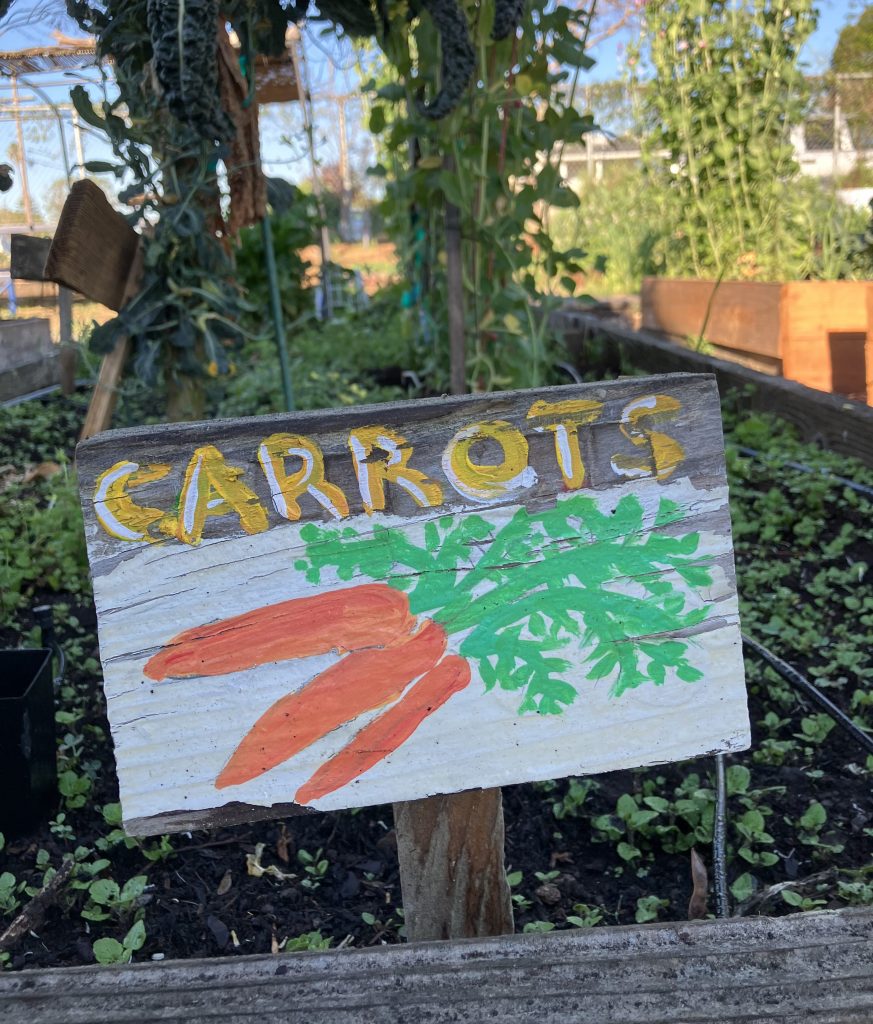
It’s time to plant peas! Have you tried the lesson below or another tasting lesson? Tell us about it in the comments below or submit a story (or photo) here. If your idea is included in the Spring Issue, we’ll send you a food-related children’s book.
Common Core Cooking aligns children’s literature to seasonal tasting lessons.

Please Pass the (Fresh) Peas! Kinder Taste Test
Part of the Common Core Cooking Series funded by the Whole Kids Foundation.

Local stories to sustain school gardens.

Leave a comment